

From the Storm to Amazing Grace: John Newton and 1 Timothy 1:15
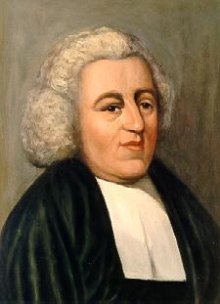
Some testimonies begin in the darkest place a person can imagine. John Newton's did.
Newton went to sea at eleven. By his twenties he had been flogged in the Royal Navy, and later he was himself held as a servant of slave traders on the coast of Sierra Leone. Rescued in 1748, he was sailing home aboard the Greyhound when a violent storm struck off the coast of Ireland and the ship nearly went down. He prayed for mercy, the storm eased, and the ship reached port. He marked that day, 21 March 1748, for the rest of his life.
It was not an overnight change. By his own later admission he did not count himself a true believer until some time afterwards, and he even went on working in the slave trade for a while. But the turning had begun. He studied the Bible, was ordained in 1764, and served the parish of Olney for about sixteen years. Later he came to regret his part in the slave trade and supported the abolition movement. He lived to see Britain abolish the trade in 1807, just months before he died. He is remembered as the author of the hymn "Amazing Grace".
Key verse (KJV), 1 Timothy 1:15: "This is a faithful saying, and worthy of all acceptance, that Christ Jesus came into the world to save sinners; of whom I am chief."
Lesson: grace does not wait for us to tidy ourselves up first. It meets us in the storm, and then keeps working on us for years.
Over to you:
- Was there a "storm" in your life that turned you back to God, and what did you learn in it?
- Whose testimony of change has strengthened your own faith?
Sources: Wikipedia, "John Newton" (en.wikipedia.org/wiki/John_Newton); Bible, KJV.
Photo: Portrait of John Newton, Wikimedia Commons (public domain)
4
•
0
•
0
0 likes
Comments
(0)
No comments yet.

Members Online:
0 Members online in last 5 minutes
6 Guests online in last 5 minutes